|
|
 
 
In April 2010, Arianna Huffington invited me to blog about veterans' issues for her site. My op-eds began with a look
at Sgt. Chuck Luther's case and soon shifted into a popular Q&A series: interviews with newsmakers, filmmakers,
artists and authors.
 |
|
Salinger the Soldier: In New Biopic, Director Danny Strong Offers Fresh Perspective on Reclusive Novelist
Nothing stirs an audience’s imagination quite like a compelling voice that suddenly, mysteriously turns silent. So it was with J.D. Salinger, the New York novelist whose uncensored coming-of-age tale "Catcher in the Rye" enraptured a broad audience when it was first published in 1951 and remains in print 67 years later, after more than 65 million copies sold.
Facing the unexpected heat of the national spotlight, Salinger retreated to his New Hampshire estate and lived essentially as a recluse, never publishing another word or letting Hollywood apply pictures and sound to his beloved novel. In the process, Salinger left generations of fans with a slew of unanswered questions and became himself even more intriguing than his novel’s protagonist.
Enter into this vacuum screenwriter Danny Strong.  |
| |
 |
| |
 |
|
Suffering from a ‘Personality Disorder’:
How My Promising Military Career Was Cut Short by a Dubious Diagnosis
In March, Senior Airman Nicole Dawson called me and pleaded for help.
Dawson had served three years with the Air Force and won multiple commendations for her service as a medic at Scott Air Force Base in Illinois. Her success was cut short when she sought out medical care herself, requesting some counseling following a family tragedy. Soon she was diagnosed with “personality disorder,” declared unfit to serve, and discharged from the military. |
| |
|
| |
 |
|
How to Uncover a Military Conspiracy
Soon after I began reporting on the military, I uncovered something quite disturbing: that thousands of our wounded soldiers are being discharged from the military not for their injuries but for "personality disorder."
By discharging them with this unusual condition, the military can deny wounded soldiers a wide range of disability benefits, saving the military billions of dollars.
How did I uncover this scandal — and what can you do to help stop these fraudulent discharges?
In November, I addressed these questions in a TED talk at TEDxVanderbiltUniversity. |
| |
|
| |
 |
|
Addressing Veteran Suicide Head-on:
Q&A with Oscar Winner Ellen Goosenberg Kent
One number: 22. That's all it took to transform Ellen Goosenberg Kent from a filmmaker to a woman on a mission. "When I heard that 22 veterans are killing themselves every day, I thought: This is outrageous. That's almost one every hour. I had to do something," she said. Goosenberg Kent was already a strong voice on veterans' issues. In 2007 she partnered with the late James Gandolfini to create Alive Day Memories, a heartwrenching documentary in which soldiers from the Iraq War reflected on the days they almost died in combat.
But suicide, that was a silent epidemic, one that needed to be addressed head-on. |
| |
|
| |
 |
|
'Trooper' Shines Much-Needed Spotlight on Iraq Vets and Uranium Poisoning
Movies, said film critic Roger Ebert, are like an "empathy machine." Their mission: to help us understand a bit more about others' hopes, their fears, their dreams. Movies allow us to walk in others' shoes. They help us "identify with the people who are sharing this journey with us."
Director Chris Martini took that mission to heart. His grandfather served in World War II, his uncle in Vietnam. Martini was inspired by their post-war struggles and was angered that the struggle of soldiers following war received minimal media exposure. |
| |
|
| |
 |
|
Investigative Reporter Alissa Figueroa Exposes Stunning Flaws in Veterans' Benefits System
Reporter Alissa Figueroa had not been producing puff pieces. Her reports for Fusion (an ABC News/Univision joint venture) had spotlighted California communities with contaminated water and examined holes in America's gun regulations. But the military, that was someone else's beat — until last November, when a veteran contacted her and described being raped while serving in the Army. He asked her to investigate. Figueroa agreed.
The data was disturbing: Since 2006, more than 96,000 service members had been sexually assaulted during their service, according to a Pentagon report. While the majority of those victims were men, only a small fraction of male victims reported being assaulted. Even more disturbing was the unexpected backlash those soldiers faced when they did report the attacks. |
| |
|
| |
 |
|
Nashville Rocker Holland Marie Drops
Fiery, Heartfelt Debut
You haven’t heard of Holland Marie. But you will.
For two years the Nashville rocker has been ripping up Music City’s honky tonks, marching across the stage in her skin-tight, black pleather pants, gyrating her hips and banging her long, brown locks with Def Leppard-like ferocity. For crowds at Crossroads and the Whiskey Bent Saloon she regularly pushes past two in the morning, pumping her fists and belting out the best of Pat Benetar and the Band Perry with an uncommon vivacity. |
| |
|
| |
 |
|
Bettie Page 'Revealed All' to Mark Mori,
Oscar-Nominated Director of Sexy, New Biopic
Few swimsuit models have set the culture on fire quite like Bettie Page.
In the early 1950s, when bikinis could not be bought in stores and photographers could be arrested for sending nude pics through the mail, Page posed for thousands of bondage and spanking photos. Her image was featured in a widely distributed series of pin-up calendars, drawing the ire of conservative Christians and triggering a Congressional investigation into the spread of pornography. |
| |
|
| |
 |
|
Winning the Language War,
Defeating 'Military Sexual Trauma'
To military families, the statistics were old news: More than 20 percent of female soldiers are sexually assaulted during service. A female soldier is far more likely to be raped by a fellow service member than killed in combat. More than 19,000 soldiers are sexually assaulted each year. The military prosecutes less than five percent of those cases.
But to most viewers of "The Invisible War," director Kirby Dick's heartbreaking film about the military's rape epidemic, that news came as a bloodcurdling shock. Dick's documentary pushed beyond those numbers, thanks to a cast of brave soldiers willing to look into the camera and describe how they were raped, then pressured by their superiors to stay silent. |
| |
|
| |
 |
|
Command Sergeant Major Tim Walz's New Mission: Getting Disability Benefits to Wounded Soldiers
Congressman Tim Walz is on a mission. More than seven years after hanging up his National Guard uniform, Walz—the highest-ranking enlisted soldier on Capitol Hill—is fighting for a group of veterans few have ever heard of: wounded soldiers discharged with "personality disorder."
Most Americans know about the enormous backlog of disability claims at the Department of Veterans Affairs. Hundreds of thousands of soldiers have returned home from Iraq and Afghanistan in desperate need of medical care, only to stand in a line one million veterans long, waiting an average of 322 days for their claims to be processed. |
| |
|
| |
 |
|
Oscar Nominee Kirby Dick Speaks Out
About Raped Female Soldiers
In 2007 filmmaker Kirby Dick read an article about the thousands of female soldiers raped while serving in Iraq. He was stunned by the numbers: More than 20 percent of female soldiers are sexually assaulted during service. A female soldier is far more likely to be raped by a fellow service member than killed in combat. More than 19,000 soldiers are sexually assaulted each year. The military prosecutes less than five percent of those cases.
Those figures fueled a fire within Dick. |
| |
|
| |
 |
|
Six Ways to Honor Our Veterans
Forget wearing a flag pin. Or slapping a "We Support the Troops" bumper sticker on your Prius. This Veterans Day push yourself to do something that's actually meaningful. Here are six ways to honor our soldiers.
1. Share this list with your Facebook friends and Twitter followers.
It's a list of organizations offering free assistance to veterans and their families. These organizations provide free medical care and psychological counseling, free legal help and job training, help in navigating the VA benefits maze, and free assistance with food, utilities and rent. |
| |
|
| |
 |
|
Guor Marial: Marathon Runner Flees Sudan,
Heads to London Olympics
Guor Marial was prepared to sacrifice his Olympic dreams.
The South Sudanese marathon runner swept through the 26.2 miles of Minneapolis' qualifying race in just 2 hours, 14 minutes and 32 seconds, a mark that should have secured his slot at the London Olympics. But nothing in Marial's life has been that simple.
South Sudan—a one-year-old nation born from the bloodshed of 39 years of civil war—has not yet set up an Olympic committee. And according to International Olympic Committee (IOC) rules, nations without an Olympic committee cannot send athletes to the Olympic games. |
| |
|
| |
 |
|
ESPN's Jeremy Schaap: Giving a Voice
to Penn State's Victims
Reporting balls and strikes is easy. ESPN reporter Jeremy Schaap is pushing a lot deeper.
While others at his sports channel were honing their catch phrases, or providing an inside look at a star point guard's amazing work ethic, Schaap was headed to Bahrain to spotlight the American ally for torturing a soccer star who spoke out against the government. He has told the inspiring story of hockey player Evan Kaufmann, the grandson of a Holocaust survivor, who is finding new life in the German hockey leagues. And he has given voice to Mets knuckleballer R.A. Dickey, a rising All-Star and a survivor of sexual abuse. |
| |
|
| |
 |
|
Q&A with K. Lorrel Manning: Director of
'Happy New Year' Takes Unflinching Look
at
Injured Soldiers
Don't let the name fool you. "Happy New Year" has nothing in common with vacuous holiday comedies like "New Year's Eve" and "Valentine's Day." The film, written and directed by K. Lorrel Manning, explores the lives of soldiers wounded in Iraq and Afghanistan, digging into the ugly internal war so many soldiers face upon returning home.
Manning's film follows the journey of Sergeant Cole Lewis (Michael Cuomo), whose face was scarred and spirit shattered on the battlefield of Iraq. Now home from the war, Lewis is sent to a veterans' hospital, where he begins to recuperate despite visits from an unsympathetic father and a nagging guilt for the dead he left behind. |
| |
|
| |
 |
|
Q&A with Jim Gaffigan: 'Hot Pocket' Comedian Reaches Out to Our Wounded Soldiers
Few men have turned being fat and lazy into a burgeoning career with as much skill as Jim Gaffigan. The acclaimed comic has produced eight albums and a series of viral videos, each probing the depths of his sloth, from the joys of riding escalators to, most famously, his hunger for Hot Pockets.
Gaffigan's latest album, "Mr. Universe," explores similar, hard-hitting material—from his favorite machine at the gym (the vending machine) to what to do with the remaining sock after you lose its brother—all while doing something quite serious: raising funds for the Bob Woodruff Foundation. The comedian is selling his new album through his website as a $5 download, a dollar of which goes to the foundation, assisting wounded soldiers and their families. |
| |
|
| |
 |
|
Q&A with Joe Berlinger, Director of
West Memphis Three Documentary
In 1993 acclaimed director Joe Berlinger arrived in West Memphis, Arkansas, a community still in shock after three eight-year-old boys disappeared, then were found dead in a nearby ravine. Facing a public that was both enraged and afraid, police scrambled to make an arrest. Soon three local teens—Damien Echols, Jason Baldwin and Jessie Misskelley—found themselves in court, accused of the murders.
With no physical evidence linking the teens to the crime, prosecutors pointed to their black clothing and interest in heavy metal music, indications, they said, that the teens had formed a devil-worshipping cult and, inspired by the full moon, murdered the boys as a sacrifice to evil spirits. |
| |
|
| |
 |
|
Little-Known Muppet Takes Center Stage: Q&A with Murray Monster, Rising Star of 'Sesame Street'
Suddenly the Muppets are everywhere. Kermit is doing "Ellen," Miss Piggy is on "Jimmy Kimmel," and Murray Monster is speaking with the Huffington Post.
Who?
Murray may not be as famous as his amphibious and porcine companions, but he is a key reason why his TV show, "Sesame Street," is still thriving deep into its 42nd season. Since 2005 the children's program has featured the adventures of the loveable monster, an oversized Elmo with an unrestrained enthusiasm and the shaggy, red fur of a neglected bath mat. |
| |
|
| |
 |
|
Q&A with Jessica Sherr, Star of 'Bette Davis Ain't For Sissies'
If you're 10 years old or younger, you know Jessica Sherr as the Fruit by the Foot Girl, the effervescent spokeswoman for the popular candy. If you're a struggling actor, you know Sherr as Coach, the founder of Always Actor, which helps New York's up-and-coming performers navigate the rough waters of Broadway.
To everyone else, she's just Bette. Bette Davis, that is. |
| |
|
| |
 |
|
Q&A with Lisa Kristine, Photographer of Slaves
The most pernicious lie still taught in elementary school is that slavery ended in 1865 with the ratification of the Thirteenth Amendment. The truth is more disturbing. Today, 146 years later, slavery is rampant, both in the U.S. and abroad. It lives in the dusty, pitch-black mine shafts of Ghana, where young men are sent to chip for gold, in the scorching brick kilns of India, where children spend endless hours lugging bricks, behind the hidden walls of San Francisco's massage parlors, where young girls are forced to perform sexual services.
According to the non-profit organization Free the Slaves, 27 million people are currently enslaved. Who are they? Lisa Kristine was determined to find out. |
| |
|
| |
 |
|
$2,000 Essay Contest for Military Families
"Support Our Troops" may be Memorial Day's official slogan, but this holiday Sergeant Chuck Luther is pushing for a second message: support our troops' children.
Millions have been following the sergeant's extraordinary story on TV, on radio and in print. Luther served 12 years in the Armed Forces, earning 22 honors for his performance. He led troops in Iraq, where he was severely wounded by mortar fire. Luther was then tortured by U.S. Army officials—held in a closet for over a month, under enforced sleep deprivation—until he agreed to sign fraudulent documents stating that his wounds were caused by a pre-existing condition, personality disorder, making him ineligible for benefits. |
| |
|
| |
 |
|
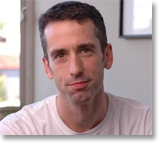
Q&A with Dan Savage: On Obama, Fox News'
Shep Smith and Success of It Gets Better Project
Dan Savage first made his mark with his nationally syndicated sex advice column, "Savage Love," an X-rated guide for a generation of kink-savvy readers, from youths interested in trying anal sex to married adults considering a three-way tryst. A gay activist—for years he asked readers to address him as "Hey, Faggot!"—Savage appears regularly on "Bill Maher" and "The Colbert Report," confronting conservatives who condemn gay marriage and denounce gay sex as half a step from bestiality.
In September, Savage caught the eye of the White House and the nation following a string of suicides by gay youths in Minnesota, Indiana and Wisconsin. |
| |
|
| |
 |
|
Letters from Tim Hetherington
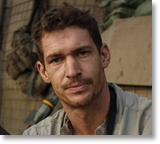
This morning I printed out all the emails Tim Hetherington sent to me over the last few weeks. They were short but thoughtful. I smiled every time my Gmail chimed, every time his name popped up in my inbox.
Tim died Wednesday in Misrata, Libya, while covering Qaddafi's attack on rebel forces, one the great photographers silenced forever. It's hard to imagine that his name will never appear in my inbox again. |
| |
|
| |
 |
|
Essential List of Organizations Helping Military Families in Need
Last week I shared my sadness at the phone calls I receive, day and night, from traumatized soldiers. They're wounded, shell-shocked and desperately in need of disability benefits and medical care. The Army has pushed them out; the Department of Veterans Affairs has turned them down. In crisis with no idea where to turn, they seek help from an investigative reporter.
Worse still, though I had been covering veterans' issues for four years, I had no idea where to send them. |
| |
|
| |
 |
|
If You're a Veteran in Need, Where Do You Turn for Help?
One of the saddest facts about the wars in Iraq and Afghanistan is that so many soldiers leave the battlefield with one question: where do I go for help? Most soldiers do not know who to call. I know this because for the last four years, many have been calling me.
Day and night my cell phone lights up with another unknown number, another soldier in crisis reaching out for help. A soldier with shrapnel embedded in his skin who can't convince the military that he is wounded and in need of medical care. A female soldier about to be discharged for reporting sexual harassment. A young vet growing ill as his case creeps through the Department of Veterans Affairs. |
| |
|
| |
 |
|
'Inside Job' Director Charles Ferguson Wins Oscar, Airs Frustration With Obama
Charles Ferguson's mind goes where others dare not travel. In 2007, when movies like "Lions for Lambs" and "Home of the Brave" were proving Iraq toxic at the box office, Ferguson released "No End in Sight," an engrossing examination of the Bush administration's post-invasion blunders. That film earned Ferguson an Oscar nomination for Best Documentary.
Last night the director captured the Oscar for his second film, "Inside Job," an infuriating look at the cronyism that triggered the 2008 financial meltdown, which destroyed millions of jobs and torched trillions of dollars in worldwide capital. |
| |
|
| |
 |
|
From Cheerleader to Wounded Vet: Oscar Nominee Sara Nesson Tells One Soldier's Epic Journey
Sara Nesson jokes that she set out to make a movie about paper. The director ended up with an intimate, heartbreaking film about Sergeant Robynn Murray, a cheerleader and National Merit Scholar who graduated high school, then joined the Army. Murray was featured on the cover of the Army's official magazine, transformed into a poster girl for the ideal female soldier. After a tour manning a machine gun and examining dead civilians, Murray returned home a physical and emotional wreck.
The sergeant sought healing on Martha's Vineyard at the Combat Paper Project, where wounded soldiers cut up their uniforms and slice their ribbons and process them into paper, which they use to make art. Nesson was there making a documentary about the project. When she met Murray, she shifted gears and began telling the sergeant's story. |
| |
|
| |
 |
|
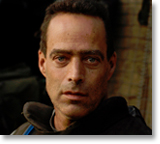
Oscar Nominee Sebastian Junger Speaks About His Year in Deadliest Place on Earth
Sebastian Junger traveled to the remote mountains of Afghanistan, to one of the most violent places on Earth, armed with a pen and a video camera. "I wanted to capture something you never see on TV: the war from the soldiers' perspective," he says.
Junger, bestselling author of "The Perfect Storm," spent more than a year in the mountains with the 503rd Infantry's Second Platoon, which pushed into the Afghan woods and set up an outpost in the Korengal Valley, a six-mile-long stretch of land in the Hindu Kush mountains populated by heavily armed insurgents. Holed up in Outpost Restrepo, the Second Platoon faced fire on a daily basis and suffered significant casualties. |
| |
|
| |
 |
|
Oscar Nominee Josh Fox Speaks Out About
Oil Lobby's Efforts to Crush His Film
Josh Fox's home sits in the woods of Milanville, Pennsylvania, near the rushing waters of the Delaware River. In May 2008 a strange letter appeared in his mailbox. A natural gas company was offering him $100,000 if he granted them permission to drill on his property.
Instead of signing, Fox decided to investigate. Armed with a video camera and a banjo, he set off on a journey up and down the Marcellus Shale, a massive reserve of natural gas that stretches 600 miles from Pennsylvania to Maryland, Virginia and into Tennessee. Known as the "Saudi Arabia of natural gas," the shale contains billions of dollars in untapped fuel. |
| |
|
| |
 |
|
Returning My iMac 2: Revenge of Mac Fans
"I'm constantly surprised at what gets a reaction and what doesn't," Time funnyman Joel Stein once told me. Stein said he'd written pieces he was sure were viral classics, like his impassioned account of chopping off his mullet. Then ... nothing. Not even a blip on the blogosphere. "Then I'd toss off some piece about peanut allergies, and suddenly my mailbox erupts."
This week I found out exactly what Stein was talking about. In recent months I've published exclusive interviews with Adam Carolla, Dr. Drew and Oscar winner Dustin Lance Black. Each piece appeared and disappeared virtually unnoticed. Then Monday I ran a brief comic riff about returning my iMac to the Apple store, perturbed that the computer didn't come with a Windows installation CD. Suddenly my inbox exploded. |
| |
|
| |
 |
|
Why I’m Returning My iMac
I practically floated into the Apple store. That’s how excited I was to leave Black Friday with a new iMac. The salesman needed merely to gesture to the 21-inch flat screen on display, and I was sold: out the door, box in hand, convinced I had turned a corner in my career.
Two weeks later I’m back at Apple headquarters—my teeth worn down, my face prematurely aged from endless hours of sleeplessness and technological frustration—certain that the iMac was the worst purchase I’d ever made. |
| |
|
| |
 |
|
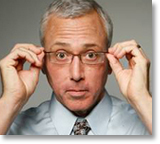
As 'Celebrity Rehab 4' Begins, Dr. Drew Speaks Out About Dating, Addiction, Fame and Adam Carolla
Dr. Drew Pinsky is lost.
He's wandering around a Pasadena parking lot looking for his new car. He clicks his automatic car door opener. And again. In the distance, a faint beep. "I can hear it... but I can't hear it," he says.
It's an odd predicament for a man whose hearing has earned him national acclaim: as co-host of "Loveline," the sex and relationship advice show, Pinsky has displayed an uncanny ability to detect sexual abuse by the pinch in a young caller's voice, drug addiction by the breathy drag of a caller's laugh. For over a decade the doctor applied those skills alongside his snarky sidekick Adam Carolla, with whom he had a crackling chemistry comatose shows like "Parker Spitzer" can only dream of. |
| |
|
| |
 |
|
Going Viral: A How-To Guide
from Time Magazine's Joel Stein
Wednesday night I rocked the political world. I went on YouTube and uploaded a remarkable video: a clip of an American soldier testifying before Congress about how he was tortured by Army officials.
The details were gruesome, the footage was jaw-dropping, and with Veterans Day just hours away, there was no doubt: I had a sure-fire hit. I sent the link to all my colleagues and friends, made myself a peanut butter banana sandwich, and hit the hay, certain that when I awoke in the morning, the U.S. Army's torturing its own would be the front page of every paper, my video a viral sensation.
The next morning I scrambled out of bed and snagged the Times from my doormat. |
| |
|
| |
 |
|
Video of Torture Hearing Released
Some of war's most disturbing moments don't happen on the battlefield. Such was the case when Sergeant Chuck Luther sat before a Congressional committee and described how he was tortured by U.S. Army officials.
Luther had been confined to a closet at Camp Taji, Iraq. He was held there for over a month, under enforced sleep deprivation, until he agreed to sign documents saying his mortar fire wounds were caused by a pre-existing condition, making him ineligible for benefits.
Below is a video of Luther's testimony, as he lays out the graphic details of his torture. |
| |
|
| |
 |
|
'How Dare You!': Q&A with Adam Carolla
Adam Carolla is lost.
He's wandering around Boston's Kenmore Square looking for Boston University's Barnes and Noble, where in 15 minutes he's expected to sign copies of his new book. A throng of fans is waiting, but the map in Carolla's hand is proving useless. He stops a local woman, then another. No luck. "Jesus Christ," he says. "These people live here. But they don't know how to get here."
These days Carolla's home is on the Internet. His podcast, "The Adam Carolla Show," is the most downloaded podcast on iTunes, with over 2.8 million listeners a month. The show's success follows Carolla's rise to fame on "Loveline," the popular sex advice radio program, co-hosted with Dr. Drew Pinsky. |
| |
|
| |
 |
|
Q&A with Author Ilan Stavans: After 13 Years, 'Norton Anthology of Latino Literature' Is Here
Ilan Stavans may be one of the sharpest pens in North America. He's one of the fastest too: since 1993 the acclaimed author has produced 48 books, enough to snap a small bedside nightstand. Those books include fantastical tales of heaven, a scholarly critique of Octavio Paz, even an ode to Hebrew, a nod to Stavans' Jewish roots.
The author says he knew from the beginning his latest work would be an entirely different animal — nothing he could complete in a season. This month, after 13 years of writing and editing, his "Norton Anthology of Latino Literature" arrives on bookstore shelves.
It is undoubtedly Stavans' magnum opus. |
| |
|
| |
 |
|
Q&A with Harry Shearer: Voice of 'The Simpsons' Speaking Up for New Orleans
As Troy McClure would say, you might remember Harry Shearer from such "Simpsons" voices as Ned Flanders, Reverend Lovejoy, Mr. Burns, Waylon Smithers, Otto the Bus Driver, and Kang the Alien Octopus.
You might also know him as the bassist from the heavy metal band Spinal Tap, author of the novel "Not Enough Indians," and host of the radio show "Le Show," a one-man vocal circus in which Shearer talks politics with angry callers, insane guests and top-tier celebrities, all of them played by Shearer himself.
This week Shearer shifts gears, with the release of his new documentary "The Big Uneasy," a serious, scientific look at how New Orleans flooded. |
| |
|
| |
 |
|
Oscar Winner Dustin Lance Black on Mormonism, Prop 8, Sarah Palin and the Challenges of Being Gay in America
Last year screenwriter Dustin Lance Black earned an Oscar for “Milk,” a biopic of Harvey Milk, the nation’s first openly gay politician, elected to the San Francisco Board of Supervisors in November 1977, assassinated one year later.
During his life, Milk called on gays to come out of the closet and be proud, a message that resonated with Black, who grew up in a conservative Mormon home and felt ashamed of his sexuality. Today Black is taking Milk’s message on the road, traveling from school to school, speaking with students about gay rights. |
| |
|
| |
 |
|
'God Hates Fags': Q&A with Pastor Fred Phelps
The Rapture is coming, says Pastor Fred Phelps, and the country is drowning in the sin of homosexuality. For 55 years, Phelps has led the Westboro Baptist Church of Topeka, Kansas, which gained notoriety in recent years for picketing the funerals of soldiers who died in Iraq and Afghanistan.
The pastor and his congregation stand outside the cemeteries, singing about the downfall of America, lifting signs that read "God Hates Fags," "Fags Die, God Laughs," "AIDS Cures Fags," "Fag Sin = 9/11," "Thank God for 9/11" and "Thank God for Dead Soldiers."
Phelps was at the center of the media spotlight this week when a federal judge struck down two Missouri laws restricting his funeral protests, saying they violated his Constitutional right to free speech. |
| |
|
| |
 |
|
An Intimate Look at Female Soldiers:
Q&A with Laura Browder
Author Laura Browder has been thinking about women and war.
In 2006 she wrote "Her Best Shot," a historical look at women and guns in America. This year she's back with a sequel to that project: "When Janey Comes Marching Home," a book that tells the stories of women who served in Iraq and Afghanistan. A collaboration with photographer Sascha Pflaeging, the book features dozens of large-scale color portraits of female soldiers, with candid interviews about what it means to be a woman in the U.S. military.
Browder, a professor at University of Richmond, says she was compelled to create the book when she realized Jessica Lynch and Lynndie England had become the war's most famous soldiers. |
| |
|
| |
 |
|
Petraeus' Vow to Protect Soldiers
General David Petraeus stepped before Congress last week and vowed to protect our soldiers. "I see it as a moral imperative," he said, "to bring all assets to bear to protect our men and women in uniform."
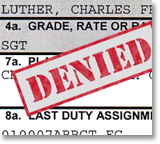
Sergeant Chuck Luther listened to Petraeus' words in disbelief. Days earlier the Army had dealt him a devastating blow: it officially rejected his appeal for a medical discharge, despite the mortar blast that tossed him to the ground, slammed his head against the concrete and left him with severe migraines, dizziness, vision and hearing loss, and piercing shoulder pain.
Luther's case made national news when he was then tortured by Army officials. |
| |
|
| |
 |
|
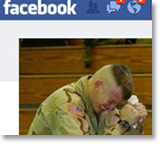
Facebook Members Rally Around Tortured American Soldier
He was a soldier before he was a salesman. Charles Nicholson joined the National Guard in 1975, served six years as a telecommunications specialist before moving on to a life as a traveling salesman, driving the interstate from Charlotte to Greenville, South Carolina, pitching transmission fluid and coolants to car dealerships along I-85.
"It's a fine job as far as it goes, but honestly, I felt like there was something I was supposed to be doing to make a difference, to touch people's lives," he says.
Then Nicholson read my article in The Nation, the story of Sergeant Chuck Luther, who had been badly wounded by mortar fire while serving in Iraq, then held in a closet by the U.S. Army. |
| |
|
| |
 |
|
When the Army Uses 'Enhanced Interrogation'
on an American Soldier
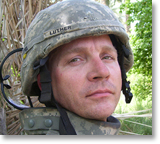
I had been covering veterans' issues for several years and thought I'd developed a thick skin. But the pain on the other end of the telephone line was difficult to stomach. Sergeant Chuck Luther, now back from Iraq, was describing his journey to hell and back.
The worst part, he said, wasn't battling insurgents or even the mortar blast that tossed him to the ground and slammed his head against the concrete — it was the way he was treated by the U.S. Army when he went to the aid station and sought medical help.
In gruesome detail, Luther described what happened to him at Camp Taji's aid station.
|
| |
|